How to Choose the Right Polaris Dune Buggy for Dubai's Desert Terrain
Understanding What Makes a Polaris Dune Buggy Suit Dubai
Dubai's desert landscape offers some of the most thrilling off-road experiences you can find anywhere. The dunes shift constantly, the sand varies from soft powder to compacted ridges, and the heat puts every piece of machinery to the test. When you are considering a Polaris dune buggy in Dubai, you are looking at a vehicle built for this kind of environment. But not every model or configuration is the same, and picking the right one means matching the machine to how and where you plan to ride.
This guide walks through the key factors to weigh before you decide. From the type of terrain you expect to cover to the mechanical features that matter most in desert conditions, each step helps you narrow down the options.
Al Badayer Desert Dubai - Dune Buggy & Quad Biking Dubai is also on Facebook.
Step 1: Match the Buggy to Your Riding Experience
Your own skill level plays a big role in which Polaris dune buggy suits you best. If you are new to off-road driving, you want a model that feels forgiving and stable. A buggy with a lower centre of gravity and a responsive steering wheel makes it easier to learn how the sand shifts under the tires. Experienced riders often prefer a more powerful machine with sharper handling and the ability to climb steep faces without losing momentum.
Watch out for the temptation to go straight for the highest horsepower model. A very powerful buggy in inexperienced hands can dig into soft sand and flip, or slide unpredictably on a ridge. Start with a model that matches your comfort level, and work up as your skills grow.
Step 2: Consider the Dune Type You Will Ride Most
Dubai's desert is not uniform. Some areas have tall, steep dunes with sharp drops on the lee side. Other stretches are broad, rolling sand seas where you can maintain speed over long distances. If your plan involves mostly high, technical dunes, look for a Polaris dune buggy with good low-end torque and a short wheelbase. A shorter wheelbase helps the buggy pivot more easily on crests and reduces the chance of getting stuck in a bowl.
If you expect to cover long trails across flatter terrain, a longer wheelbase and a higher top speed become more useful. The buggy will track straighter over gentle undulations and feel less jittery at speed. Ask yourself where you will spend most of your time. A machine that excels on steep dunes may feel clumsy on long, fast runs, and vice versa.
Step 3: Check the Safety and Protection Features
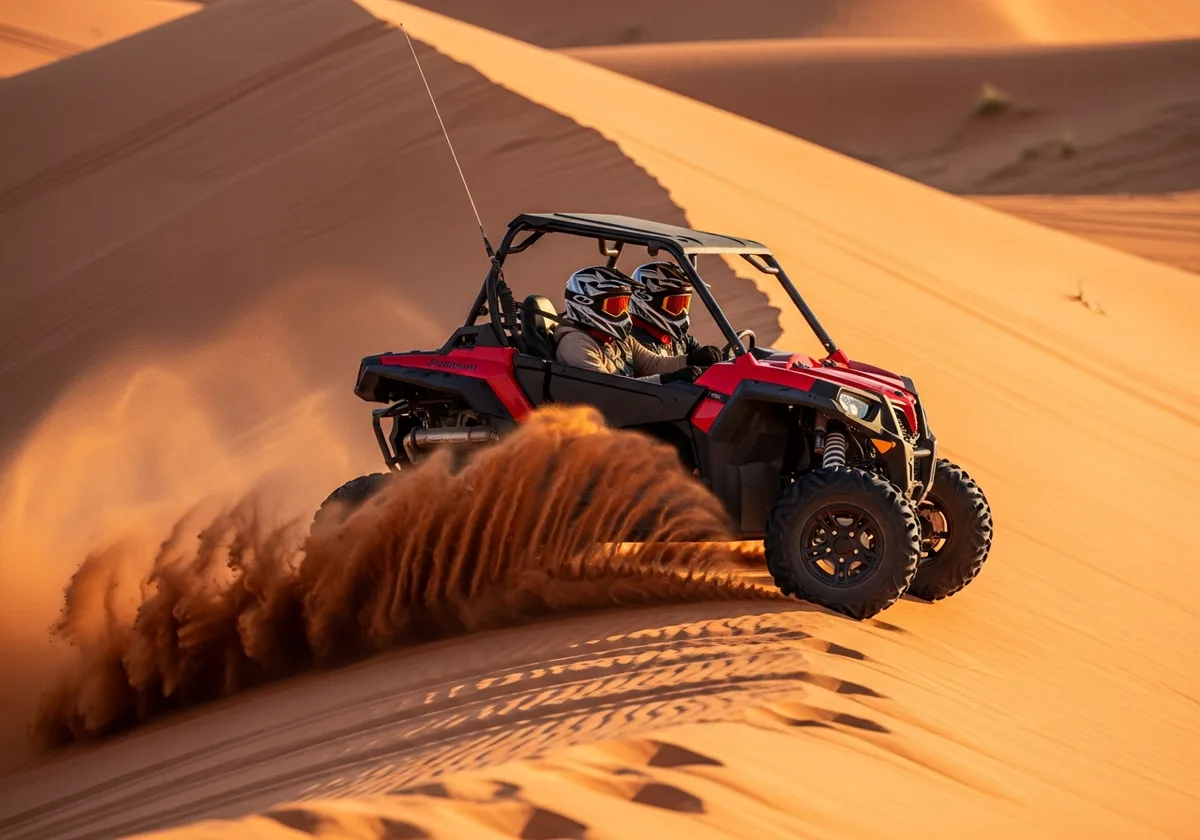
Desert riding carries inherent risks, and the safety gear built into the buggy matters as much as its power. Every Polaris dune buggy intended for serious off-road use comes with a roll cage. That frame is your primary protection if the buggy overturns. Look for a roll cage made from welded steel or aluminium tubing that extends well above your head. Inspect it for any signs of damage or modification if you are looking at a used machine.
The harness seatbelt is another critical item. A standard lap belt is not enough when the terrain gets rough. You want a multi-point harness that holds you firmly in the seat. In a rollover, a proper harness keeps you inside the protective zone of the roll cage. Check that the harness adjusts easily and that the buckles are in good working order. Comfort matters too, because a harness that digs into your shoulders on a long ride will distract you from driving.
Step 4: Evaluate the Drive System and Tires
Four-wheel drive is almost essential for serious dune riding. Sand is loose and unpredictable, and a two-wheel-drive buggy will struggle to climb soft slopes or pull itself out of a pocket. A Polaris dune buggy with a reliable four-wheel-drive system that you can engage on the fly gives you the best control. Some models let you switch between two-wheel and four-wheel drive depending on the conditions, which saves wear on the front drivetrain when you do not need it.
The tires are your connection to the sand. Look for wide tires with a paddle-like tread pattern designed for desert use. Narrow tires with a shallow tread dig in and bog down. The air pressure also makes a big difference. Lowering the tire pressure increases the footprint and helps the buggy float on top of the sand. Many experienced riders carry a small compressor or a portable air tank so they can adjust pressure on the trail. If you buy a buggy that comes with standard all-terrain tires, plan to swap them for sand-specific ones before you hit the big dunes.
Step 5: Think About Maintenance and Heat Management
Dubai's summer heat pushes engines and cooling systems to their limits. A Polaris dune buggy that runs well in cooler climates may struggle here if it lacks adequate cooling. Look for models with a large radiator and a high-capacity cooling fan. Some buggies also have an oil cooler as standard. These features help prevent overheating during long climbs in soft sand when the engine works hardest.
Regular maintenance becomes more frequent in desert conditions. Sand gets into every moving part. Check how easy it is to access the air filter, because you will need to clean or replace it often. A buggy with a pre-filter that traps larger particles before they reach the main filter saves you time and money. Also consider how simple it is to change the oil and inspect the drive belt. Machines that require removing half the bodywork for routine service will frustrate you over time.
One local option is Al Badayer Desert Dubai - Dune Buggy & Quad Biking Dubai. When you look at what is available, keep in mind that the right buggy for you depends on your own preferences and the specific desert trails you plan to explore.

Step 6: Test the Controls and Comfort
Before you commit to a particular model, spend time sitting in it. The steering wheel should fall naturally to hand, and the gas pedal should be easy to press with your foot without lifting your heel off the floor. The seat should offer enough support for your lower back, especially on long rides. Some buggies have adjustable pedals and steering columns, which help if you share the machine with other drivers of different heights.
Pay attention to the noise level. Some models have better sound insulation than others, and a loud engine can become exhausting after an hour. Ear protection helps, but a well-designed buggy is noticeably quieter inside the cabin. Also check the visibility. The roll cage and any windscreen should not create blind spots. You need a clear view of the terrain ahead, especially when cresting a dune and you cannot see the drop on the other side.
Step 7: Decide Between New and Pre-Owned
Buying a new Polaris dune buggy gives you the latest features and a full warranty. You know the machine has not been abused, and you can break it in according to your own schedule. The downside is the higher upfront cost. If you are new to the sport, a new buggy is a significant investment for something you might find you do not enjoy as much as you expected.
A pre-owned buggy can be a good way to start at a lower price, but you need to inspect it carefully. Look for signs of sand ingress around the engine bay and the wheel bearings. Check the roll cage for cracks or bent tubes. Listen for unusual noises from the transmission and the drive belt. If possible, take a test ride on soft sand to feel how the buggy handles. A machine that has been used mainly on hard-packed trails may have different wear patterns than one used on dunes.
Step 8: Factor in Transport and Storage
A dune buggy is not a vehicle you drive to the supermarket. You need a way to get it to the desert and a place to store it when you are not riding. Consider the size and weight of the buggy relative to your vehicle and trailer. Some of the larger Polaris models are heavy enough that you need a capable tow vehicle and a sturdy trailer with a winch.
Storage matters too. A buggy left in direct sunlight in Dubai's heat will suffer from faded plastics, dry-rotted tires, and degraded seals. A covered storage area or a garage protects your investment. If you live in an apartment, check whether the building allows you to store a large vehicle. Some self-storage facilities in Dubai accept buggies, but factor that cost into your overall budget.

Making Your Decision
Choosing the right Polaris dune buggy in Dubai comes down to being honest about your experience, your typical terrain, and how much time you will invest in maintenance. There is no single best model for everyone. A buggy that feels perfect on a test drive may frustrate you on a long, hot day in the dunes if you overlooked something as simple as seat comfort or air filter access.
Take the time to research the specific models available in the region. Talk to other riders and ask about their experiences. Read through forums and watch videos of the buggies in action on desert trails. The more you learn before you buy, the happier you will be with your choice. And remember, you can always start with a rental to test different styles before committing to a purchase.
Al Badayer Desert Dubai - Dune Buggy & Quad Biking Dubai is located at Almas Tower - First Floor, Office #06 - الثنيه الخامسة - أبراج بحيرات الجميرا - دبي - United Arab Emirates.